Compost Tools: Aerators, Thermometers, and the Gear That Earns Its Keep
A compost pile needs exactly two things from you: oxygen, and a way to know when it's working. This hub covers the gear that delivers both — two aerators for the first, the thermometer cross-referenced from our five-model showdown for the second — and then makes the case for buying less: the fork, the squeeze test, and the "tools" that don't earn their shelf space in a home compost system.
What the tools actually do
- Aeration: the pile's only real input. Aerobic microbes run on oxygen. As a pile settles, it compacts, and the interior goes anaerobic — that's the source of the smell, and the reason a hot pile that stops cooking usually just needs air. There are two ways to deliver it: a full turn with a fork (best — it also mixes, re-wets, and redistributes the reaction through the whole mass), or quick vertical channels with an aerator rod (fast — two minutes a week, and the right tool for a stationary bin where a full turn isn't practical).
- The corkscrew aerator: how it works. Plunge the helix into the pile, twist it down, pull it out. The channels it leaves vent the core, and the mass above settles back into them. It's not a substitute for a full turn on a hot pile — the channels don't mix — but for a stationary open-bottom bin (the Redmon/F2C type), it's the whole maintenance story: a few minutes a week, for the life of the pile.
- Temperature: the read on whether the reaction is working. A hot pile holds above 131°F, the temperature that kills weed seeds and pathogens on the EPA/NIOSH schedule, and proves the aerobic reaction is running. 90–110°F is a slow pile; below that, it's a cold pile and it's supposed to be slow. Which probe to trust, and what each of the five styles does wrong, is the whole Compost Thermometer Showdown — we link to that page instead of re-testing here.
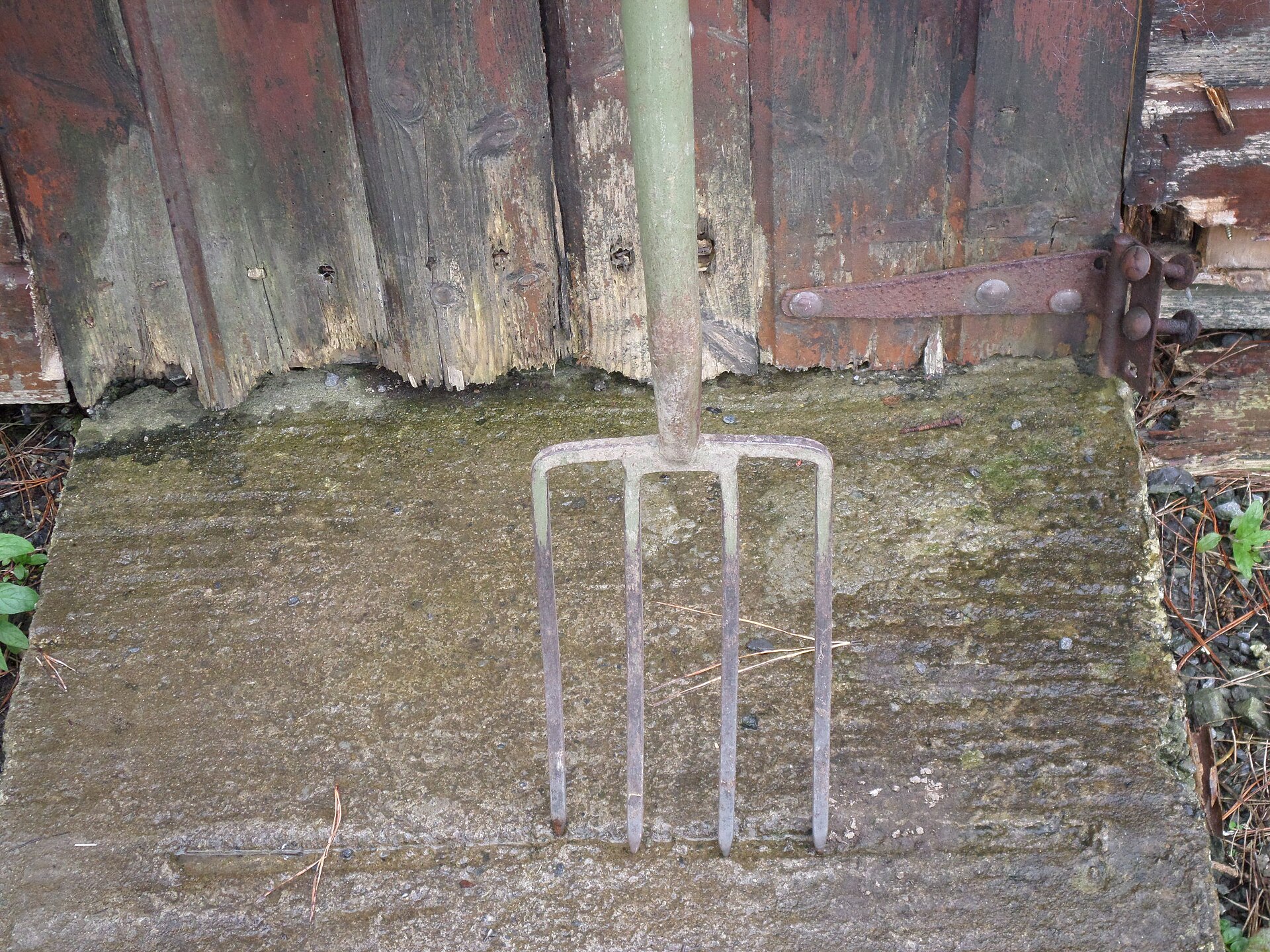
- The fork is the tool the category under-sells. A six-tine garden fork on a long handle is what does a full turn: you lift 10-plus pounds of material over your head and rebuild the pile from the outside in. No aerator replaces it. Any hardware store carries a working one for less than the cheapest tool on this page — but if you'd rather shop a specific fork online, we've compared four turning tools by pile size on our Best Compost Turners page (affiliate-linked).
The two aerators, side by side
| Aerator | Head | Reach | Handle | Review base | For |
|---|---|---|---|---|---|
| EJWOX Compost Aerator | Stainless corkscrew | Standard length | Wood | 4.7 (17) · 100+ bought/mo | Quick channels on a small-to-mid pile |
| Yard Butler ICA-36 | Corkscrew aerator | 36 in | Long reach | 4.2 (175) | Deep 3-ft piles where the core matters |
Prices move weekly; the listing behind each link below shows the current price. Reach matters: an aerator that can't reach the pile's core can't aerate the part that's actually going anaerobic.
The picks
-
01
View EJWOX Aeratoraffiliate linkBest for quick aeration — EJWOX Compost Aerator
The small-end tool: a stainless-steel corkscrew head that won't rust in a wet pile, a wooden handle, and a 4.7-star rating across 17 reviews with 100+ bought in the last month. It's the two-minute-a-week tool for a stationary bin or a pile that's settled between full turns — plunge, twist, pull, done. Buy it when the pile is small enough that the reach of this model gets to the core, or when the full turn happens on the fork's schedule and this is the in-between fix.
-
02
View Yard Butler 36 inaffiliate linkBest for deep piles — Yard Butler Compost Aerator, 36 in (IC A-36)
The deep-end tool: 36 inches of reach, the full depth of a three-foot pile, so the aerator reaches the core where the anaerobic pocket actually is. 4.2 stars across 175 ratings — the more-reviewed aerator in this category — and a long-handle design that keeps your back out of the loop. It's the pick when the pile is tall (the open-bottom Redmon/F2C types build to that height) and the aerator has to do the full maintenance load between fork turns. The short-aerator version of this same model exists for smaller piles; the 36-inch is the one that works on a full-height pile.
-
03
Read the Thermometer Showdowninternal linkThe thermometer — tested separately
The only "sensor" a home compost system needs is a deep-stake probe, and we've already done that test: five models, five failure modes, one pick that earns its money. Rather than re-run the comparison here, the full evaluation — what each style measures, what each does wrong, and which to buy — lives in the Compost Thermometer Showdown, with the picks and links. The one-line version: buy the deep-stake model that reaches the pile's core, and read it the same time of day every time you check.
The two aerator links above are Amazon affiliate links. We may earn a commission if you buy through them, at no extra cost to you.
What not to buy (the anti-list)
- Wheel aerators and motorized aerators. For a home pile, the fork does the job a wheel does, and the motorized version adds weight, failure modes, and a price for a task you're doing a few times a month. The aerator rod in this list is the only powered-free tool that earns its shelf space at home scale.
- Soil moisture meters. The squeeze test replaces them: grab a handful from the pile's midsection, squeeze it. A damp sponge with no free water is the right moisture; dripping means too wet, crumbly means too dry. No meter has ever changed a decision that test couldn't.
- Fancy sifting hardware. A piece of hardware cloth and a shovel sifts finished compost for screening weed seeds and fines. The sifting-screen products exist, and they're fine, but the hardware-cloth version does the same job at a hardware-store price.
- Anything that claims to "accelerate" compost on its own. The inputs are carbon, nitrogen, water, air, and time. Tools deliver the air and tell you about the temperature; the rest is a recipe, not a gadget.
Use the tools right
- Hot pile: two to three full turns in the first two weeks, then a two-minute aerator session weekly to keep the core ventilated between turns. The turns are what build the pile; the aerator is what keeps it alive.
- Cold pile: aerate monthly, don't obsess. A slow pile is slow by design — a full turn at month three beats a weekly aerator ritual, because the cold pile's job is to break down, not to hold temperature.
- Turn on a dry day, aerate on a wet one. A wet pile smears on a full turn — the fork drags the mass and the structure breaks down. The aerator channels a wet pile fine, because it doesn't try to move the material, just the air.
- Reach the core or don't bother. An aerator that stops a foot short of the pile's center is aerating the already-aerated outside. A three-foot pile needs the 36-inch tool; a two-foot bin is fine with the standard-length head.
- Read the thermometer on a schedule. Same time of day, same probe depth, logged or remembered. A single reading is noise; a trend across the first two weeks is the signal that tells you whether the pile is hot, slow, or cold.
Affiliate disclosure: the product links on this page are Amazon affiliate links. We may earn a commission if you make a purchase at no extra cost to you. Every pick above is labeled "affiliate link" at the point of purchase. Full disclosure.