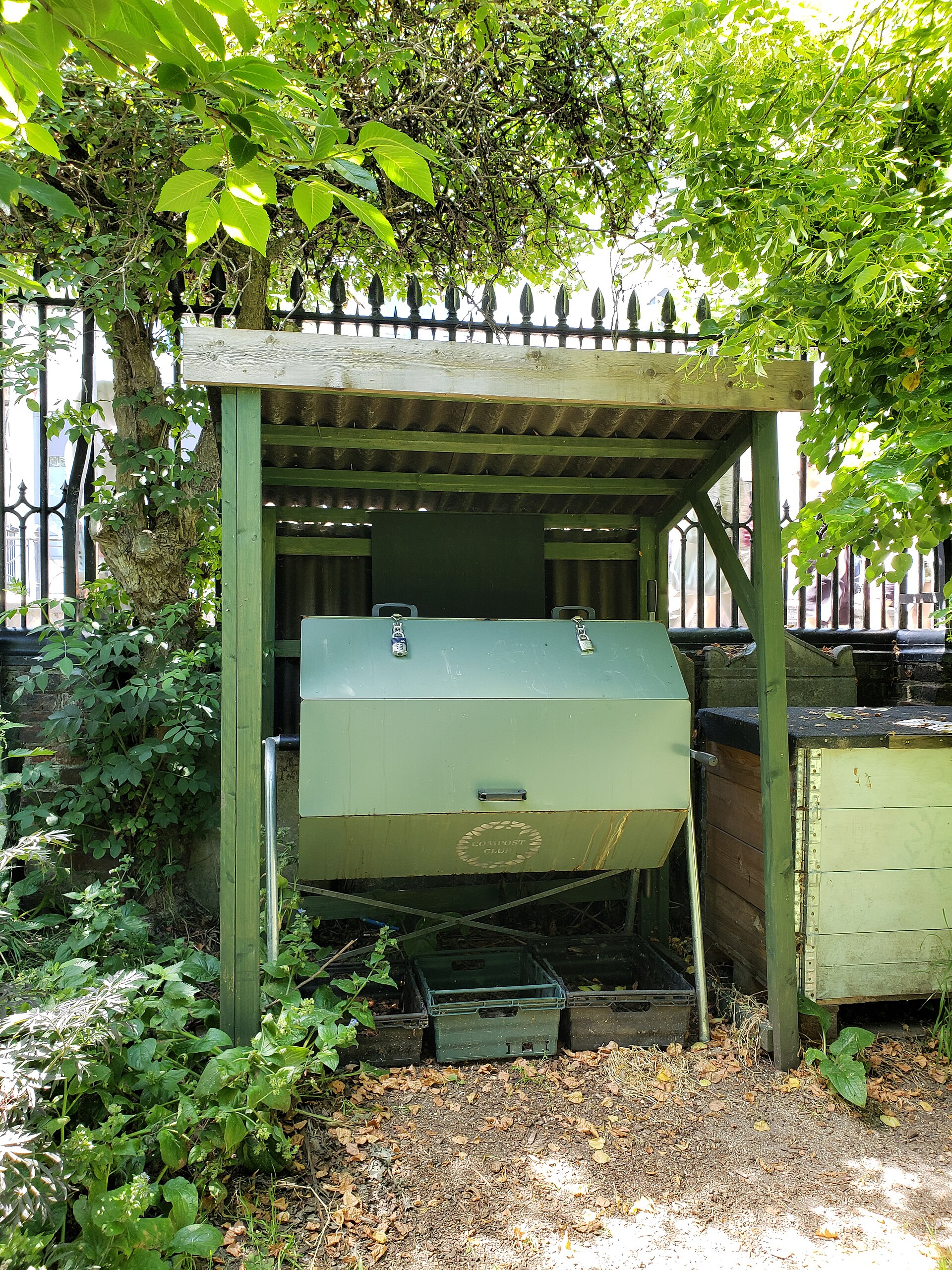
Best Compost Bins & Tumblers: 6 Systems Compared
Every outdoor composting system is a machine with the same job: keep a big pile aerated, moist, and rodent-bored while it works. Where they differ is how much of that job they do for you — and whether the plastic they're made of survives ten years of sun. Here are the six we'd actually put in a yard, by construction, not by adjectives.
How we pick an outdoor system
Three questions decide the outcome, and the marketing copy usually ignores all three:
- Aeration design. A tumbler aerates by rotation — deep internal fins break clumps each turn, and 5–6 turns every few days keeps the pile aerobic. A stationary bin can only do it by holes: the more distributed the vents (and the more you're willing to fork the pile), the closer it gets. This is the single biggest speed difference between the two classes.
- Access for harvest. The best designs let you take finished material from the bottom without dismantling the pile — a tumbler's door, a bin's bottom doors, or a ring you unclip. Top-only access means every harvest is a shovel-and-sift project.
- Material honesty. "Recycled plastic" ranges from 100% post-consumer polypropylene (FCMP) to 80% (Redmon) to unmarked food-grade PP (VIVOSUN, F2C). It matters less than people think for the first three years — UV-stabilization is what kills tumblers, and every decent brand does that — but it's the first spec worth reading.
The six, spec-for-spec
| System | Type | Capacity | Footprint | Aeration | Harvest access |
|---|---|---|---|---|---|
| Redmon 65 | Stationary bin | 65 gal (8.7 cu ft) | 26 × 26 × 31″ | Vent holes | Lift-off lid + 4 bottom doors; open to soil |
| FCMP IM4000 | Dual-chamber tumbler | 37 gal (2 × ~18) | 8-sided drum | Rotation + deep fins + adjustable vents | Two large doors, one per chamber |
| VIVOSUN 43 | Dual-chamber tumbler | 43 gal | 26.25 × 23.6 × 36.5″ | Rotation + 8-panel deep fins + adjustable vents | Two doors (10.2 × 6.2″ each) |
| Miracle-Gro 55.4 | Dual-chamber tumbler | 55.4 gal (2 × 27.7) | ~28″ wide, hexagonal | Rotation + venting | Two sliding doors that lift out |
| F2C 80 | Stationary bin | 80 gal | 23 × 24 × 32″ | 80 punched vents | Flip-top lid + pull-up bottom door; open bottom |
| GEOBIN | Expandable ring | Up to 216 gal at max 3.75″ diameter | You choose — 7 lbs | Perforated sides, open top | Unclip and open; open bottom on soil |
Tumbler capacity splits between the two chambers — the working batch is half the headline number. Prices move weekly; the listing behind each link below shows the current price.
The picks
-
01
View Redmon 65-Gallonaffiliate linkBest overall stationary bin — Redmon 65-Gallon
The trapezoid that kept showing up in independent tests: 65 gallons in a 26-inch-square footprint, 80% post-consumer recycled plastic, a snap-off lift lid, and four bottom access doors — which is the feature that makes a stationary bin feel effortless, because harvest is a crouch-and-scoop instead of a dig-through. The open bottom puts the pile on live soil, which is the quietest advantage in this whole category: earthworms and soil microbes move in on their own. The trade-offs are real — no rotation means you fork the pile yourself to aerate, the plastic is lighter than the tumblers (anchor or weight it in wind), and it takes 15 pounds empty. For most yards, it's the right default.
-
02
View FCMP IM4000affiliate linkBest tumbler — FCMP Outdoor IM4000, Dual Chamber
The most-reviewed tumbler in North America (4.5 stars across roughly 18,000 ratings) and the one built with the most honest material claim: 100% post-consumer recycled, BPA-free, UV-resistant plastic, made in Canada. Two ~18-gallon chambers on an 8-sided drum with deep fins — the fins are the part that makes rotation actually aerate instead of just churn — plus adjustable air vents. The workflow is the dual-chamber idea at its cleanest: one side finishes a 2-week warm-season cycle while the other fills. Buy it when your waste stream is a family's kitchen scraps plus some yard trim; if you're processing serious leaf volume, size up to the VIVOSUN or Miracle-Gro below.
-
03
View VIVOSUN 43-Gallonaffiliate linkBest mid-size tumbler — VIVOSUN 43-Gallon
More drum than the FCMP for the same workflow: 43 gallons total across two chambers, an octagonal PP body on a galvanized steel frame (21.7 lbs), 8-panel deep fins, adjustable vents, and doors big enough to fit a bucket inside (10.2 by 6.2 inches). The galvanized frame is the durability story — plastic tumblers fail at the axle, and steel-on-steel is the long-term fix. It ships with garden gloves, which says something about the price point. The trade-off: the chambers are the same 43-gallon class as the FCMP's, so pick this one for the frame, not for extra space.
-
04
View Miracle-Gro 55.4-Gallonaffiliate linkBest large tumbler — Miracle-Gro 55.4-Gallon
The workhorse: 55.4 gallons total, the largest dual-chamber tumbler in this comparison, with two 27.7-gallon chambers that genuinely clear a large garden's season. Hexagonal drum on a galvanized steel base, BPA-free UV-protected plastic, and two sliding doors that lift out completely — the easiest door geometry here for filling and emptying. Reviewers consistently report finished compost in 4–6 weeks in warm months, which is the high end of what any tumbler does, and the hexagonal sides make a full drum easier to grip and turn than a cylinder. Plan the footprint before ordering: it's ~28 inches wide and wants about four feet of swing room around it for the handle.
-
05
View F2C 80-Gallonaffiliate linkBest large stationary bin — F2C 80-Gallon
The biggest rigid bin here: 80 gallons of BPA-free polypropylene in a 23-by-24-inch footprint, with the most aggressive passive aeration of any bin on this list — 80 punched vents around the body. The open bottom on live soil does the same thing as the Redmon's (worms come in from below; one owner calls it "pseudo-vermicomposting"), and the pull-up bottom door makes harvest a one-hand job. Assembly is five minutes of snap-locking. The honest wear points are in the long-term reviews: the snap tabs and latch mechanism are the parts that age, and the lid likes a little weight on it in wind. At this capacity it's the pick for kitchen-heavy households with yard space against a fence line.
-
06
View GEOBINaffiliate linkBest budget & yard waste — GEOBIN Expandable Ring
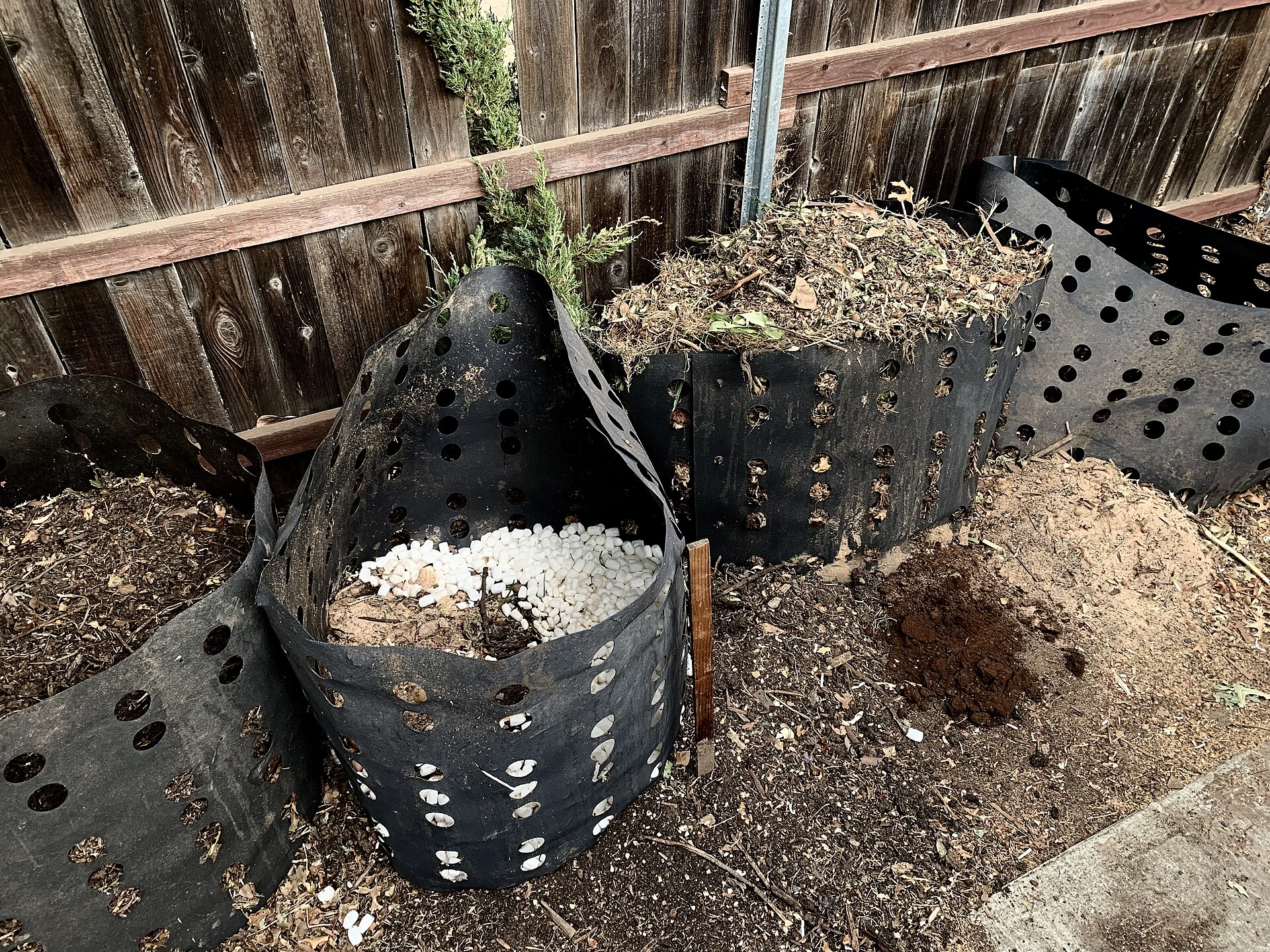
A different animal: a perforated plastic ring, 7 pounds, that clips into a circle up to 3.75 feet in diameter and holds up to 216 gallons (the listing headline says 246 — the product spec sheet says 216, so budget for the latter) of whatever you're feeding it. No tools, no assembly, re-diameter in seconds, made in the USA, and it's the cheapest path to hot-compost volume when the pile is mostly leaves and straw. The compromises are its whole philosophy: open top means rain exposure (soggy in wet winters) and zero pest deterrence, so it's a containment ring for brown, dry material — pair kitchen scraps with a lidded collection and transfer them in. You still turn the pile by hand; the ring just makes the pile big enough to be worth it.
The six system links above are Amazon affiliate links. We may earn a commission if you buy through them, at no extra cost to you.
Worth pairing: a thermometer
None of these systems tells you the pile is done or that it's stalling — a probe does. A $15–$20 deep-stake compost thermometer is the highest-value accessory in the whole category: it's the difference between "I think it's ready" and 130°F and rising. We benchmarked five of them against each other in our Compost Thermometer Showdown — it's an affiliate-linked page too, so check it before you buy.
The rules that beat the hardware
- Start with a 3:1 to 1:1 brown-to-green ratio by volume — the classic rule of thumb, and the reason "my bin smells" almost never needs a bigger bin.
- Add in handfuls, not buckets. Tumbling systems stall when a full bucket of greens lands on a half-full chamber; the moisture spike outpaces the aeration.
- Rotate on a rhythm. For tumblers, 5–6 full turns every 2–3 days in warm weather keeps the pile aerobic without you lifting a fork.
- Check the bottom, not the top. Finished compost exits from the bottom up; the top of the pile is always the freshest, hottest zone.
- Match the system to the waste stream. Kitchen-heavy → closed bin or tumbler with good doors. Leaf-heavy → ring or big bin on soil. Both, evenly split → dual-chamber tumbler.
Affiliate disclosure: the product links on this page are Amazon affiliate links. We may earn a commission if you make a purchase at no extra cost to you. Every pick above is labeled "affiliate link" at the point of purchase. Full disclosure.